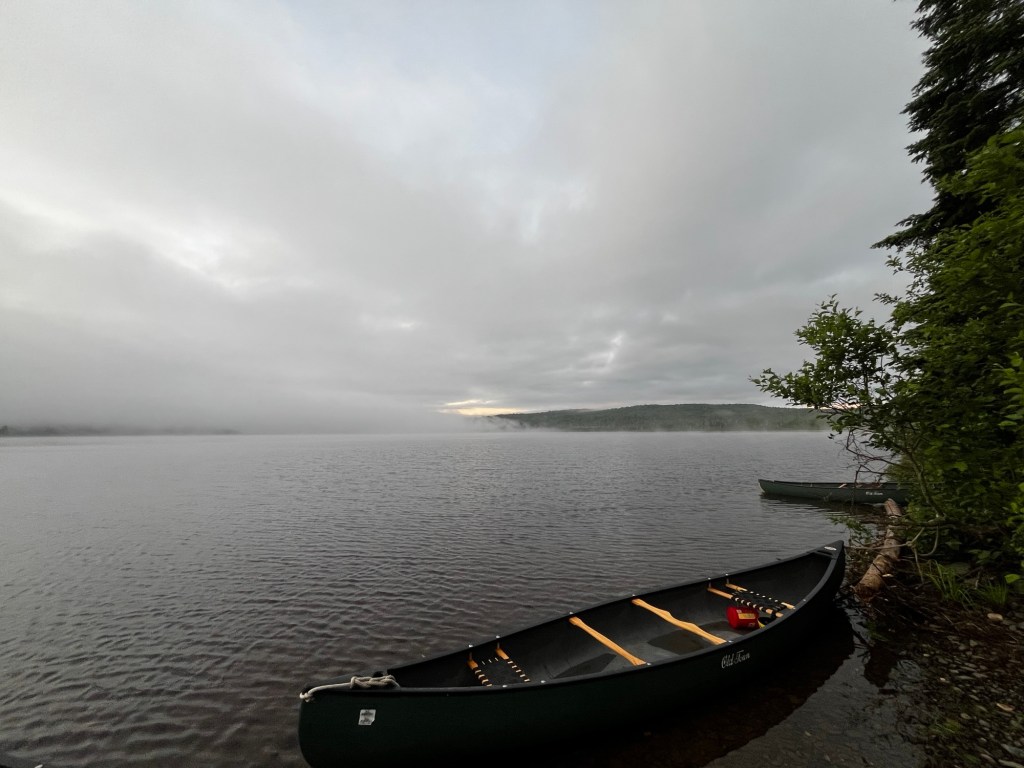
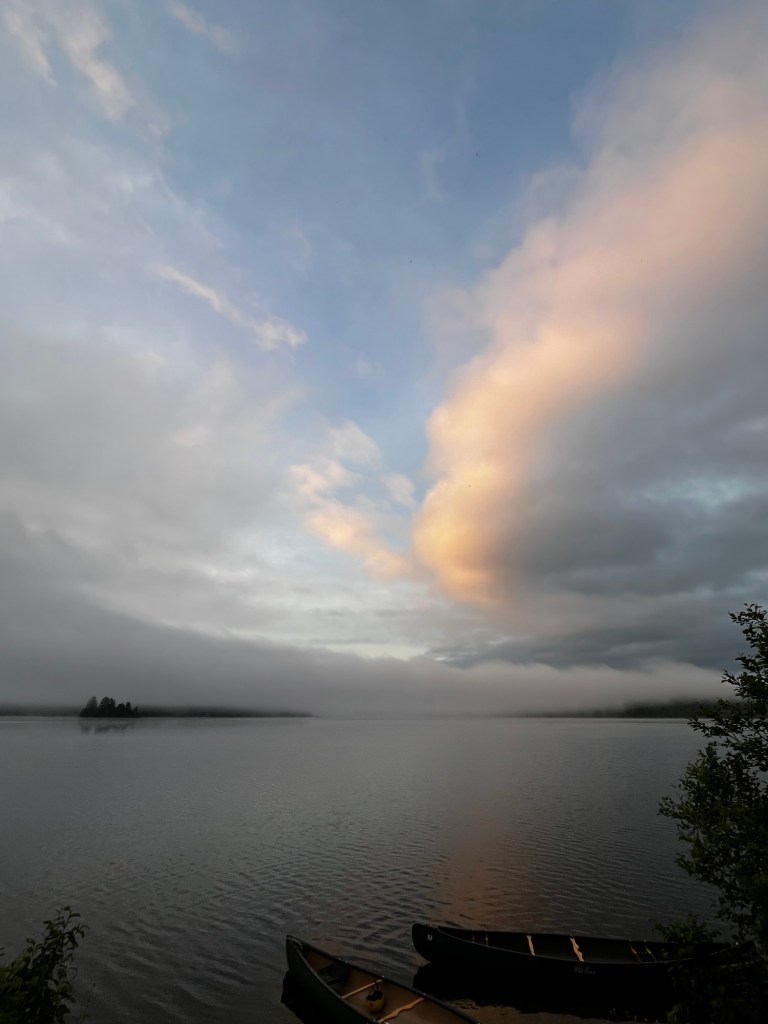
The fog shifts in mysterious ways, cloaking distance shores in blankets of gray, releasing others to graceful columnar massifs rising majestically towards the heavens being painted by the rising sun. I never knew what to expect when I threw the tent flap back every morning and peeled myself out and rose to greet the day. Every day was a surprise, and that Thursday on the Allagash was no different. We had passed our halfway point of the trip and we were in a groove, ready to move on to our next campsite and forge our way along the river. The scouts wanted to get an early start so as to ensure we got the campsite we wanted, Cunliffe Depot, and so opted to be woken at 4:30AM in hopes to have eaten breakfast, broken down camp, and be paddling before 7AM. Despite my incredulousness, I was pleasantly surprised when, aside from a few grumbles and exhortations by their fellow scouts, they achieved their goal and we were all paddling by 7. The morning was nice and cool and it promised to be a beautiful day, mostly sunny with a few passing clouds and the day did not disappoint. As we began our day and passed other campsites around Round Pond, none of other campers had the ambitions that our scouts did and all of them were still eating breakfast when we paddled past.
As we made our way down the river, we had only one little conflict between scouts that needed resolving. On the surface, and not being in their boat, it was quite humorous to listen to them bicker about paddling technique and who was doing what, even the fact that one was eating while he should have been steering and the front oarsman wasn’t going to paddle until he handed over his snack, the splashing back and forth. But underneath the humor, there was indeed a conflict that needed resolving and so after our late morning snack break, another adult and I pulled them aside and had a little conversation with them. We got them talking, worked through their issues, and while up till that point they had been lagging behind, the second to last boat for the morning, after that little talk and snack, they took the lead and were out front till we landed at our campsite. It was a great paddling day and we completed all our miles, about 12 of them by just around noon time and were afforded the entire afternoon to rest or explore as we saw fit.
The campsite was set up quickly, we ate lunch, and began gathering firewood for the evening. Some kids, exhausted by the whole week thus far, took naps while the adults played a few card games. By mid afternoon, there was no escaping the sun and so 3 of the adults (myself included) and 1 scout decided to go for a dip in the river. We strapped into our life vests and waded in. The water was freezing and it took two of us a good minute or two to work our way in, letting each new segment of our skin get numb before proceeding farther. Then the third adult came right in and submerged himself immediately much to our own astonishment. A quick dip was all I needed to bring my core temperature down and make the rest of the afternoon much more pleasurable. Back on land, and changed out from our wet clothes, we say a number of crews paddle past our campsite, reinforcing our choice to get an early start and secure our desired campsite. Soon after our dip, our guide told us of some old logging trains that were abandoned just up river from our campsite, maybe 50 yards by canoe, and a handful of us opted to make the short journey and explore.
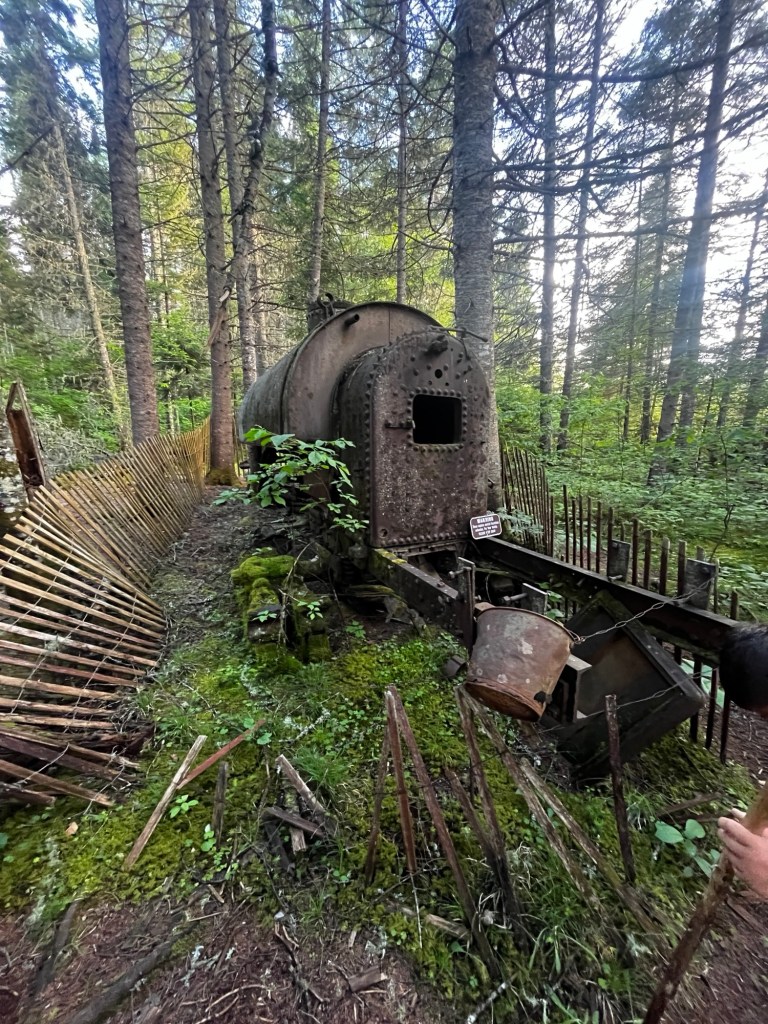
We paddled or more aptly poled our way upstream, and took a few minutes to explore the abandoned equipment. It wasn’t much, but there was an old locomotive they used and a few other ancient pieces of equipment. So while we were treated to a pristine wilderness to paddle through, it was evident that it wasn’t always so pristine. There are still logging operations ongoing in Northern Maine, but they don’t clear cut like they used to and at least along our section of the Allagash, we say no new evidence of the logging, only ancient equipment, left for the passage of time to reclaim and subsume into itself. While I enjoyed seeing the remnants of old logging operations, it also made me realize that there are few areas that humans have not had an impact on. We have touched nearly every aspect of nature in some way, and this wilderness we were paddling through was no different. I’m glad we got to see it restored and regrown in such a way, but a part of me wonders what it would have been like to see the old growth forests gracing the banks of the Allagash, paddling with the knowledge that no human, or very few had every set foot there. But those are dreams for a different lifetime, centuries before my own life. Seeing evidence of humans doesn’t diminish my sense of wonder and awe at being able to ply these waters under my own power, it just shifts it subtly.
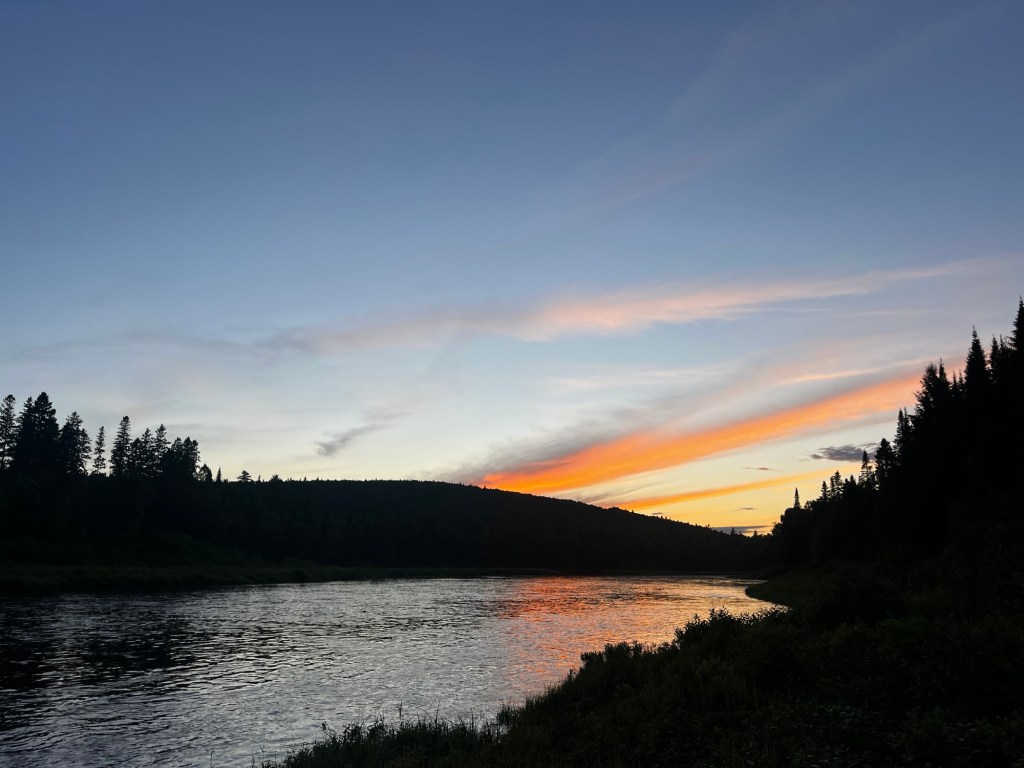
Back at the campsite, it was time to gear up for dinner. The fire was still going, drying the remaining clothes from our dip in the river, and our stack of firewood was sufficient to get us through the evening and into the morning for coffee. We were treated to a beautiful sunset but as we gazed upon the shifting colors in the darkening sky, we also knew the forecast for our last full day on the river was for rain, a soaking rain that was supposed to last all day. Despite that, I held on to the fact that the forecast said 93% chance, which left a 7% chance of no rain. Yes, when I have the opportunity, I’ll look at the positive and hold on to the slim chance that there might not be rain, or at least not as much as the forecasters were predicting. We would have to wait and see. Till then, it was time for sleep.


Leave a Reply