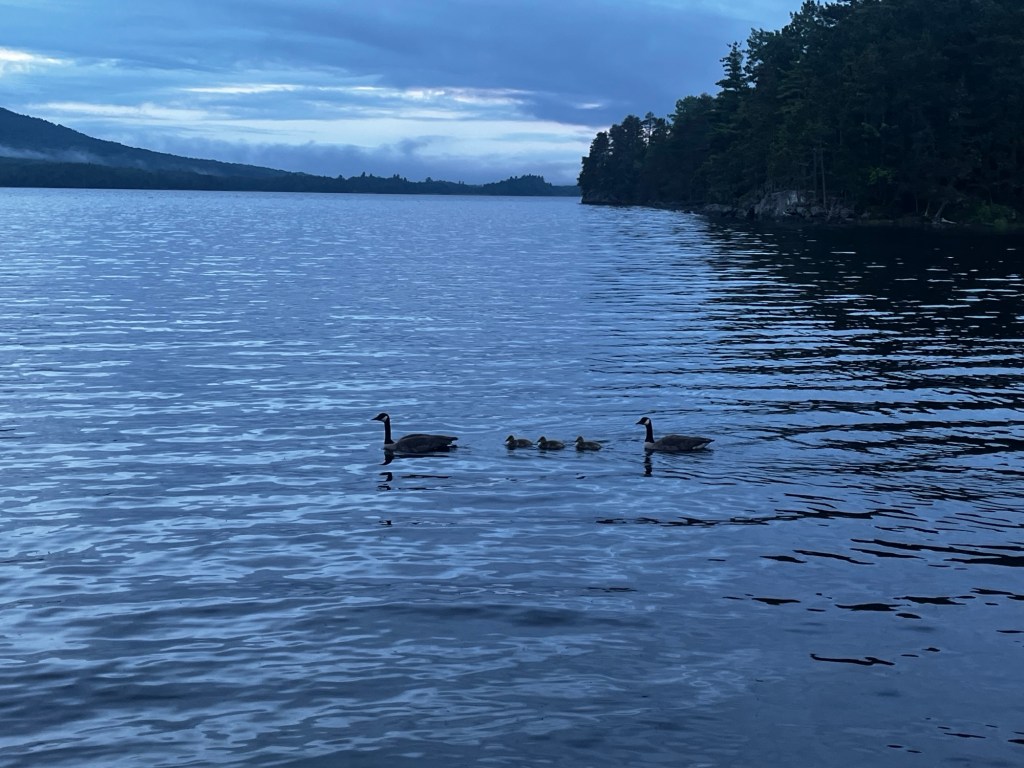
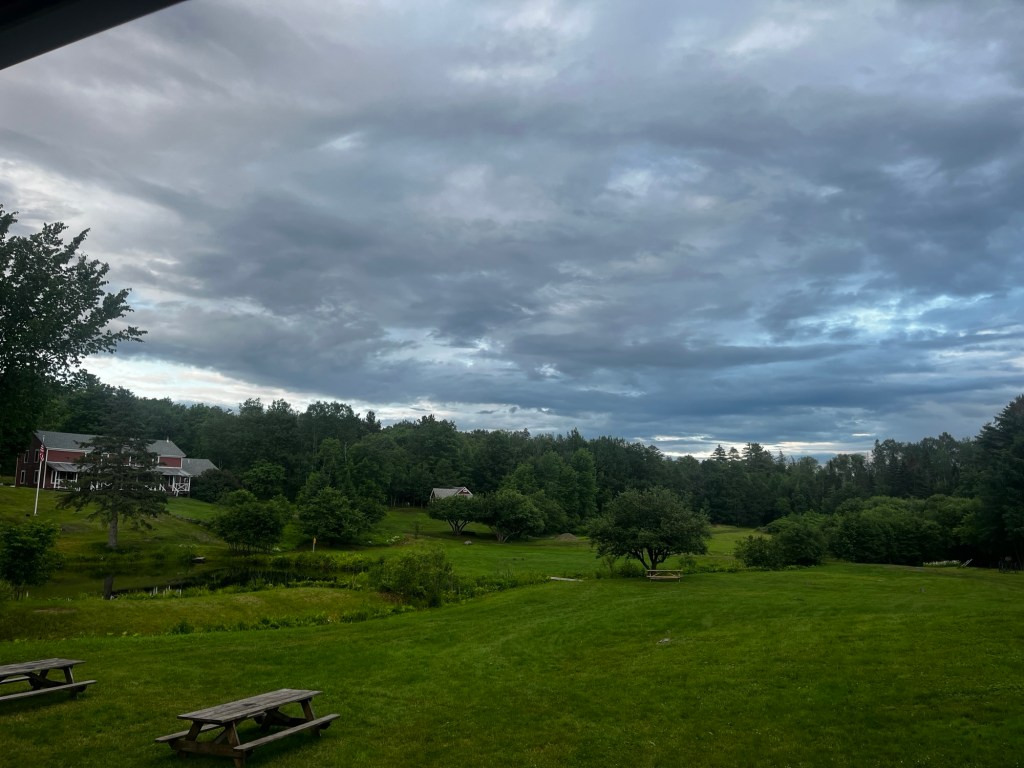
This day had to come, a return to civilization; cars, roads, increasing amounts of people, normal routines. But before all that, there was still a little bit of paddling to do. We woke up not to clear skies as we had wished, but a lingering drizzle that was dissipated slowly as we began to pack our gear. It would have been nice if everything was dry, the sun was beaming, and it hadn’t rained all night, but that was also not the case. Some scouts and the other adults ended up with a few puddles in their tents, everything was a little damp including the moods of those crawling out of their tents after me. It was a good thing the full day of rain had come towards the end of the trip and looking back, the length of the trip was just right. Emotions were getting a touch raw, and everyone wanted to be done. There was a little pot of gold that everyone was looking forward to though, a small diner across from our pull out about 4 miles down the river. All the scouts opted to get up early again to make sure they had as much time at the diner as possible. So with a little struggle, our gear was eventually packed up and ready to go, and even with a little bickering back and forth among some scouts, we managed to get on the river before 7 AM.
Once we were on the river, the rain finally stopped, and as we drifted even closer towards the Canadian border and the St. John River, the clouds began to thin, the darker gray rain clouds being broken by a lofty wind, slowly dragging the larger clumps away, leaving lighter gray and white marbling the sky above till finally, within a mile of being done with the Allagash we spotted our first glimpse of blue sky in over a day. It was as if a blanket had been lifted, our moods rose along with the dissipating clouds and the scouts randomly broke into song as we raced towards the pull out. Speaking of racing, as we darted around one more bend in the river, we almost flew right by our pull out, the Pepsi sign we were looking for being blocked by another placed directly in front of it. But the scouts, having honed their skills over the past week, swiftly corrected course and propelled themselves like experts right to the base of the gravelly slope we had to climb and the awaiting diner food across the road.
We unloaded all our gear, dragged it all to the top of the slope, and made our way across the street to the diner, which seemed to me more converted house than an actual diner. Upon entering, we were greeted by a tiny counter behind which we could see the griddle and 1 cook, the walls plastered with photos, 1 dollar bills, and other mementos accumulated over many years of opening their door to customers. The dining room, with maybe 6 tables, none of them matching on an uneven wide plank floor, was adorned with multiple deer mounts on the walls. It was perhaps the cutest little diner I had ever been in and is a place I would go on a weekly basis if it were closer, but then again, I don’t think it would be the same anywhere other than where it was. So we took up the two largest tables with our crew and struggled not to order everything on the menus. The scouts, when ordering pancakes, were unsure how to handle the two thick frisbee sized cakes when they arrived, and almost everyone got a tall milkshake, cleaning the owner completely out of ice cream in a 30 minute run. Our eyes were bigger than our bellies and most of us left with extra food in tow.
By the time we were wrapping up, our driver Rick had shown up and had a bite to eat of his own. We sat for a few minutes as he ate, the scouts being sent outside to load the trailer with all our gear and the canoes. Soon after, Rick made his way outside, goading the scouts to pick up the pace, checking their knots on the canoes, and shuffling them all into the van for the 4 hour ride back to base camp. On our way, we passed the Canadian border, America’s first mile on route 1, the post road, and meandered our way back south and away from our week of tranquility and wilderness. Most of the van slept for at least an hour or so, only a handful remaining awake, and upon arriving back at Grand Lake Matagamon, we were greeted with bright sun and what seemed to be the warmest day of the week. One last time unloading gear and one more time paddling across the lake. It was hot, there was no wind, but we made it and couldn’t wait for the hot showers. There was a distinct stench that we harbored after lack of showers for a week on the river, I’m just glad it wasn’t too hot all week as I imagine we could have smelled much worse.
It was bittersweet returning, unpacking all our gear, ensuring we had all the backpacks emptied, the tents set up to dry for a bit, and gathering our gear for returning home the next day, but all good things must come to an end. It is up to us to create those memories, hold them dear, and carry them with us as we return to everyday life. We had one last dinner that the camp cooked for us, baked beans cooked in a dutch oven buried in the ground amidst coals for hours, thick chunked ham, molasses bread, slaw, and our northern favorite, Moxie. It was quaint ending to the trip, a hot shower and the dinner capping off a wonderful week in the wilderness. The scouts, for their part, forged deeper bonds between themselves, found out what they were capable of, and got to experience what most people wouldn’t even think of trying. We managed a week on a river in Maine, carrying all our food and gear we would need for a week, cooking all our own meals, and surviving without support. It was a grounding experience to say the least and one I would jump at the opportunity to do again in a heart beat. As for the scouts, they decided one last time to wake up at the crack of dawn and get as early a start as possible the next day heading home. That night, I would have almost preferred being in a tent versus a cabin, but we had transition back to real life at some point.


 Alexander Zamachaj
Leave a comment