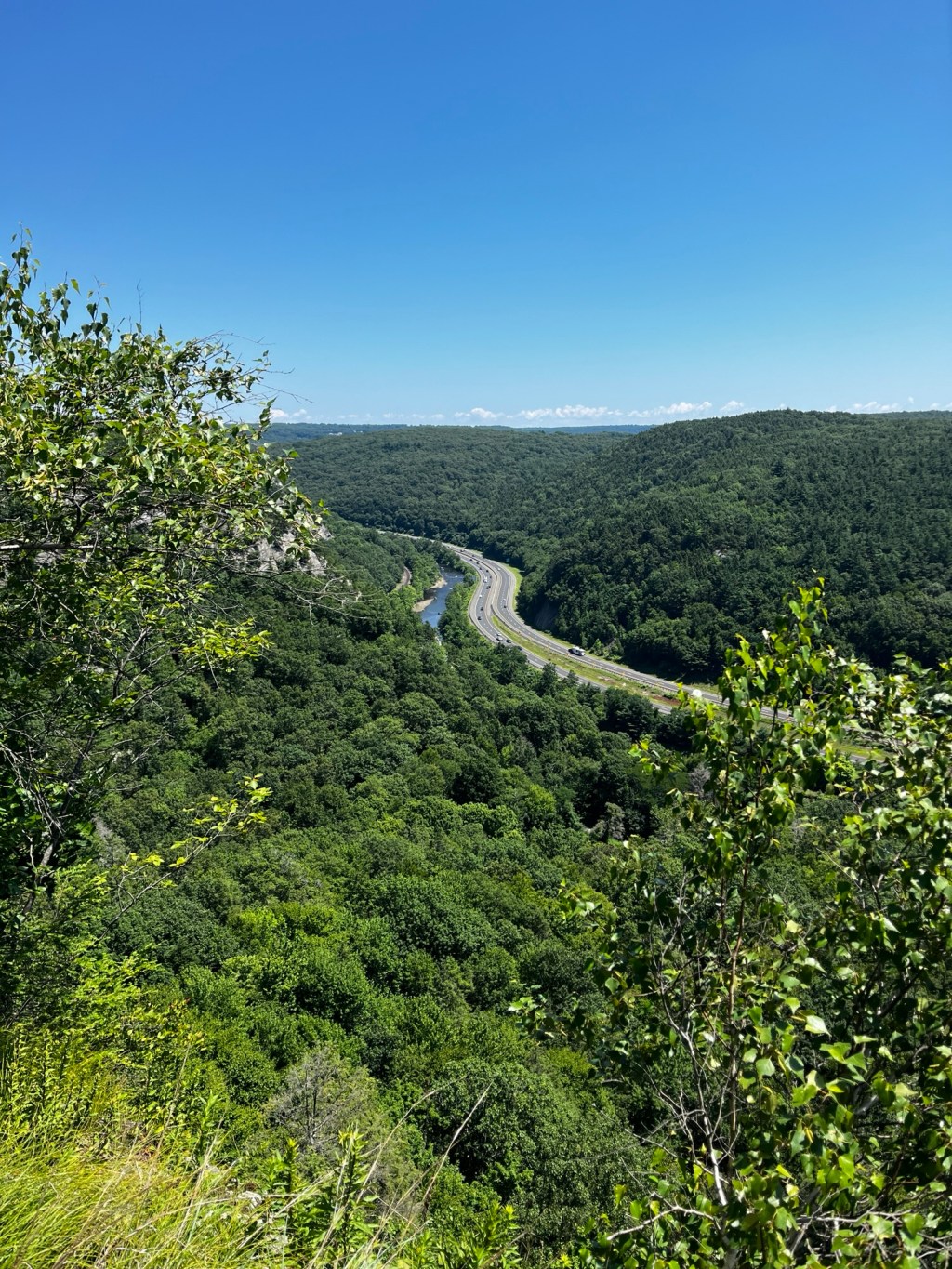
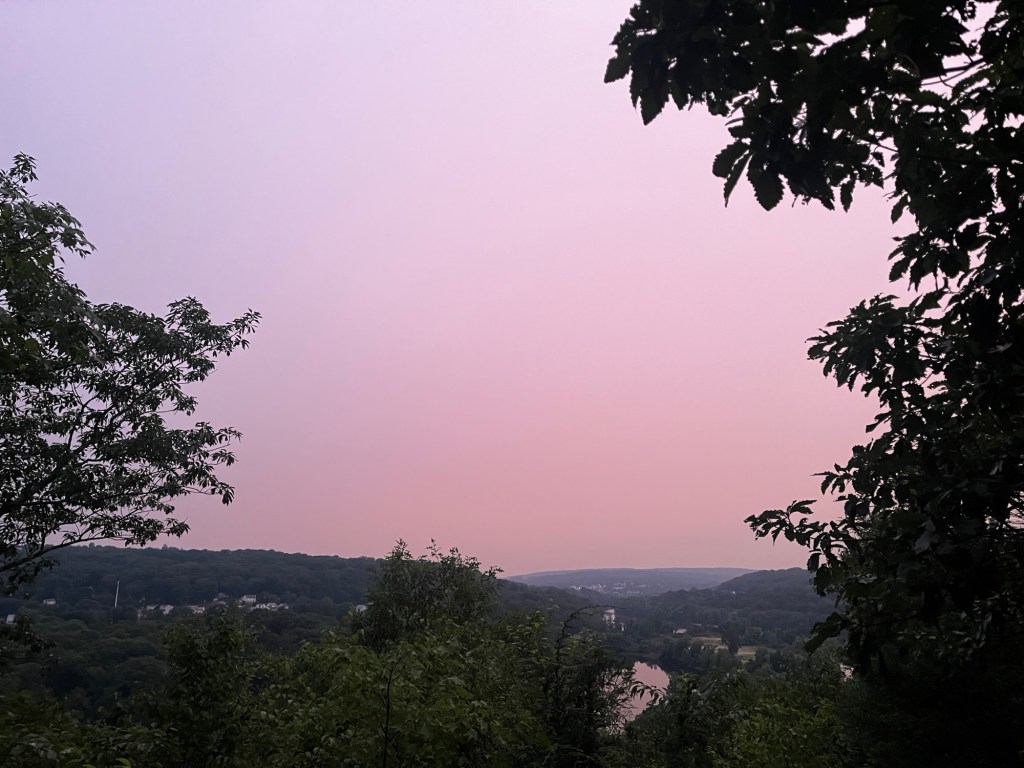
The air and sky the last few days have reminded me of a book I just recently finished, “The Road” by Cormac McCarthy, a post-apocalyptic novel set in the future in which everything is dead except a handful of survivors who struggle to find the bare necessities to live. While the world isn’t dead or dying just yet, the air makes it feel like there is an imminent threat just beyond view that just maybe we should pay attention to. Visibility has diminished to mere miles, hilltops struggle to be seen in the distance, the air tastes and smells like the distant fires causing this haze, thick and chalky. The sun, when it appears, looks ominous as it casts a fiery glow, distorted and pervasive, orange and threatening, as if the world is about to catch fire and burn to a crisp. It doesn’t help that the temperature is hovering in the upper 80’s, the air is stagnant and too thick for even a gentle breeze to penetrate and bring relief. To step outside is to feel oppressed, as if the world is pressing in from all sides, a pressure cooker without a relief valve, building with no escape, cooking everything under its cover slowly but surely.
This shouldn’t be normal, although there was one other time within the past few years we had to deal with this, the dense smoke of Canadian wildfires, caught and brought down on currents of air, blanketing thousands of square miles with dense smoke, for some too thick to breathe. I know there are people who deal with this dense haze on a more regular basis, either from their own nearby wildfires or from the haze of pollution even more toxic to their health. This is a far cry from that brief period when the world shut down with Covid, people stopped driving, wildfires seemed to be temporarily non-existent, and the air became so crisp and clear it seemed we had travelled backwards in time to pre-industrial norms. Yet in this warming world of ours, it seems this is more the norm, more wildfires and weather extremes; higher temperatures, more rain and flooding, more chaotic and disastrous storms. Despite all the Armageddon like imagery we see, especially the thick haze and smoke of wildfires, there is always hope, there is always a way to turn things around.
“The Road” may occur in the distant future (at least I hope it does), but there is a glimmer of hope within those pages, a few individuals who show the goodness of their nature, their willingness to help when most others will pillage and rob, and so to, we must hold out hope that there are those among us who can make a difference. Sometimes it seems like we are entering Armageddon, our world filled with dense haze and smoke, our world burning as we feed the fire, but it doesn’t have to be like that, we can make a difference. It takes each of us making a conscious choice to cut back, to not stoke the fires of climate change, to be more cognizant of how we live and behave in a world filled with more and more people. We have a responsibility to humanity, to ourselves and our children, to not just go along with things, to maintain the status quo, but to make a difference, even just a little bit at a time, and help dial and ratchet back the lever of climate change. If we all did a little more, we could make a difference. Yes, I’m being optimistic here, because frankly, I’d rather be optimistic than its opposite, even if I have to stare at the haze and smoke when I walk outside, because I know that eventually this smoke and haze will pass, the fires will get put out, and we will get another chance. How many more chances do we get? We don’t know and that’s why we need to start now, to do our little part that can make that difference, if not for ourselves, at least for our children who will deal with the repercussions of our actions far into the future.


 Alexander Zamachaj
Leave a comment